Sewage Smell in the Yard? What Your Septic System Is Telling You
August 31, 2026
QUICK ANSWER: A septic smell in the yard usually means system gas is escaping somewhere it should not, and the spot where the odor is strongest points to the cause. Near the house it often traces to the plumbing vent or a cracked sewer line. Around the tank it usually means a loose or damaged lid, a worn access seal, or a tank overdue for pumping. Over the drain field it can signal effluent rising toward the surface because the soil is no longer absorbing it. A healthy system carries its gases up and away, so a lingering yard odor is a signal worth tracing rather than masking.
You step outside on a warm afternoon and the air near the back of the house carries a sour, sulfur edge. It fades when the breeze shifts, then drifts back. Maybe it hangs over one corner of the lawn, settles near the tank lid, or seems to follow you toward the far end of the yard where the ground feels softer underfoot than it should. That odor is not random. A septic system is a sealed, vented process, and when it starts announcing itself outdoors, it is telling you that something in that process has broken its seal or fallen behind on the work.
The good news is that the smell itself is a diagnostic tool. Where you notice it, when you notice it, and what else is happening on the ground around it narrow the list of causes quickly. Below is how to read those clues on a Central Florida property, where sandy soil and a shallow water table give onsite systems a harder life than they get almost anywhere else.
Why a Working Septic System Should Never Smell
Inside the tank, bacteria break down solids in an oxygen-free environment, and that digestion produces gases: mostly hydrogen sulfide, methane, ammonia, and carbon dioxide. Hydrogen sulfide is the rotten-egg note most people recognize. In a healthy setup, those gases do not build up around the yard. They travel back up the main line and out through the plumbing vent on the roof, where they disperse high above the living area.
So a persistent outdoor odor almost always means one of two things: the gases are escaping at a point they should not, or the biology inside the tank has shifted so that far more hydrogen sulfide is being produced than usual. When beneficial bacteria fall behind, sulfate-reducing bacteria take over and drive up that rotten-egg smell. Harsh drain chemicals, bleach, and antibacterial cleaners are common reasons the balance tips, because they thin out the very organisms doing the digestion.
Understanding that split matters, because it separates a nuisance you can often trace in an afternoon from a system that needs attention below ground.
Where the Smell Is Coming From Tells You What Failed
Walk the property and pay attention to where the odor concentrates. The location is the single most useful clue you have.
Near The House
An odor that clings to the walls or comes and goes with the wind often points to the plumbing vent rather than the tank. On low lots, in tree cover, or during still air, wind currents that should carry vent gases up and away instead push them back down into the yard. A cracked or partially blocked vent stack, or a broken sewer pipe between the house and the tank, produces the same result. If the smell shows up only when a shower or washing machine is running, the cause is usually indoor plumbing, such as a dried-out floor drain trap, not the yard system at all.
Near The Tank
A smell that is strongest right over the tank usually means gas is leaking from the access points. Plastic lids rely on a rubber gasket that hardens and splits over the years. Concrete lids crack, shift, or get bumped out of position. Inspection and cleanout pipes need snug caps, and a missing or broken cap will vent odor straight up. A tank that has simply filled past its working capacity also smells more, because there is less room for waste to settle and digest before liquid moves on.
Over The Drain Field
This is the location that deserves the most respect. If the odor is strongest out in the yard above the buried trenches, and the ground there is damp or spongy, effluent may be rising toward the surface because the soil below can no longer take it in. That is a different order of problem from a cracked lid, and it is covered in its own section below.
TIP: Before assuming the worst, do a slow lap of the yard on a calm morning and note the single spot where the smell peaks. Marking that location, and whether the ground there is dry or wet, gives a technician a running start and often shortens the diagnosis to a single visit.
The Drain Field: When the Smell Comes With Soggy Ground
The drain field does the final filtering, and it tends to fail quietly until the signs surface all at once. A sewage smell over the field, paired with any of the following, points to a field that is struggling:
Standing water or spongy soil above the trenches that does not dry out between rains. Grass that is greener and taller directly over the field than anywhere else on the lawn, fed by nutrients it should never receive. Slow drains and gurgling toilets indoors even though the tank has been maintained. When those show up together with an outdoor odor, the field is the prime suspect.
The usual mechanism is a layer called biomat, a dense organic film that builds along the bottom and walls of the trenches. A thin biomat is normal and even helps treat wastewater. When too much partially digested waste reaches the field, often because the tank is overdue for pumping or its bacteria are depleted, the biomat thickens until water can no longer pass through it. Liquid then backs up and finds the path of least resistance, which is upward to the lawn.
A missing or corroded outlet baffle accelerates all of this. That baffle is the barrier that keeps floating scum inside the tank. Once it fails, scum washes straight into the trenches and clogs them from the inside, which is one of the fastest ways to ruin a field. Hydrogen sulfide gas is corrosive and attacks the concrete above the water line, which is exactly why baffles and the tops of tank walls wear out over time.
How Central Florida Soil and Weather Change the Picture
Local conditions matter more here than the age printed on a permit. Around 30 percent of Florida households rely on an onsite septic system, and the region's sandy soil and shallow water table shape how these systems behave. Sand drains fast, which sounds helpful, but it also means less soil depth is available to treat effluent before it reaches groundwater. When the water table rises after a wet stretch, the cushion of dry soil beneath the trenches shrinks, and a field that copes fine in the dry season can start surfacing.
After Heavy Rain
A short-lived odor following a downpour is common and not always a fault. Saturated ground cannot absorb effluent at its normal rate for a day or two, so organic matter lingers near the surface and smells stronger until the soil drains. If the odor clears within a few days, the system likely just needs the ground to dry out. If it returns every single time it rains, the field is probably already near its limit and using the storm as the last straw.
Time Of Day And Season
Cool, dense air at dawn and after sunset traps gases close to the ground instead of letting them rise, so a faint odor that appears in the evening and burns off by mid-morning is often a weather effect rather than a failing part. A smell that holds steady through a warm, breezy afternoon is more likely to be a real leak or a struggling field.
WARNING: If you find sewage water or consistently wet, spongy soil over the drain field, keep people and pets away from that area and arrange a professional assessment promptly. Surfacing effluent is untreated wastewater, and letting anyone or any animal come into contact with it turns a repair into a health hazard.
What You Can Check Yourself and What Needs a Professional
A few checks are reasonable for a homeowner to make from ground level. Look at the tank lids and any risers and confirm they sit flush and are not cracked. Check that inspection and cleanout caps are present and tight. Note when the tank was last pumped: most households in this area need a pump-out every three to five years, and an overdue tank is a frequent, fixable cause of odor. Glance up at the roof vent for a bird nest, debris, or an obvious crack.
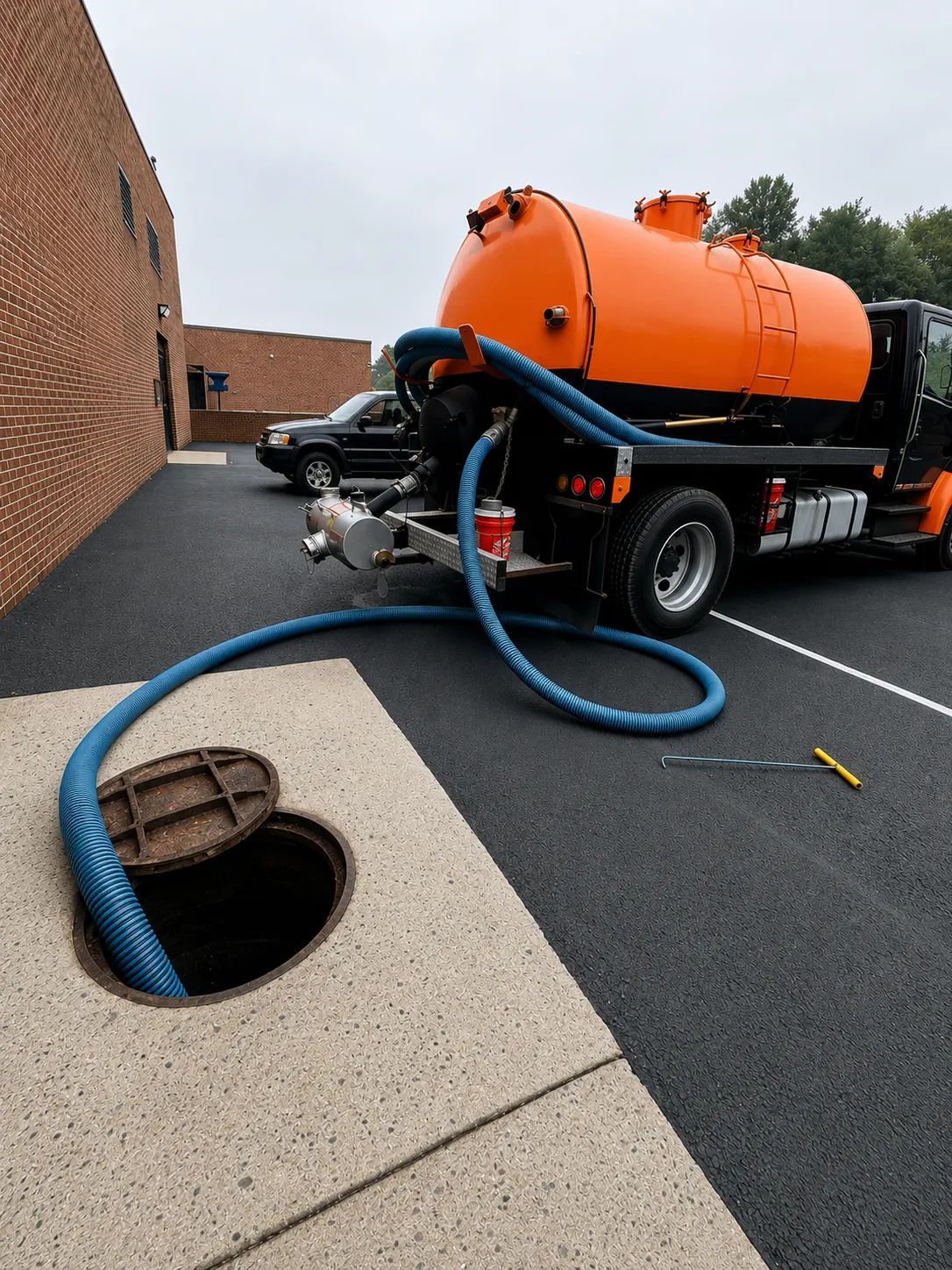
What should stay with a professional is anything below the surface or inside the tank. Never open a tank and lean in to look. In enclosed spaces, the gas mix can displace oxygen and reach concentrations that incapacitate a person within seconds, so tanks are treated as confined-space hazards and left to crews with the right equipment. Tracing a cracked outlet baffle, measuring sludge and scum depth, locating a broken sewer line, or judging whether a field can recover all call for probing, cameras, and experience reading how these systems behave in local soil. A technician can measure the layers, confirm whether the tank simply needs pumping or a component has failed, and tell you honestly whether the field can be rested and recovered or needs rehabilitation.
Catching the cause early is what keeps a small repair from becoming a field replacement. A worn gasket, a loose cap, or an overdue pump-out is minor work. The same odor ignored for a season, while scum quietly loads the trenches, can turn into the most disruptive job on the property.
Frequently Asked Questions
Why does my yard smell like sewage only sometimes?
Cool evening and morning air traps gas near the ground, and shifting breezes push vent gases downward. Odor only while water runs indoors usually means a dry plumbing trap, not the outdoor system at all.
Is a septic smell in the yard dangerous?
In open air the gases disperse and are mostly a nuisance. Real risk sits in confined spaces like the tank, and anywhere wastewater has surfaced, so keep people and pets well clear of that ground.
Can pumping the tank get rid of the smell?
Often yes, when a tank has filled past its working capacity and gas escapes as solids crowd the outlet. If odor returns soon after pumping, suspect a cracked lid, worn seal, or a failing field.
What does it mean if the grass over my drain field is greener than the rest?
Lush, dark green grass over the trenches means effluent is releasing nutrients and moisture too close to the surface. Paired with odor or soggy ground, it suggests a field that is overloaded or partly clogged.
Why does the smell come back every time it rains?
A brief odor after heavy rain is normal, since saturated soil cannot absorb effluent at its usual pace. Odor with every storm suggests the field already sits at its limit and needs a professional assessment.
How often should a septic tank be pumped to prevent odor?
Most Central Florida households need pumping every three to five years, though household size, water use, and tank size shift that interval. A tank is ready once sludge and scum layers crowd the outlet pipe.
Reading the Signal Before the Smell Becomes Damage
An outdoor septic odor is a system describing its own condition in the only way it can. The spot where the smell peaks, the state of the ground beneath it, and the weather on the day all narrow the cause to a failed seal, a tank past its working capacity, or a field losing its ability to absorb. Reading those clues early keeps the work small, because the distance between a hardened gasket and a saturated drain field is often just one wet season.
Local ground makes that timing tighter than it would be elsewhere. Sandy soil and a shallow water table around Lake Wales, FL leave less margin than most regions allow, so a field sitting near its limit tends to reveal itself after the first long stretch of rain. Brooker Septic Servicee has spent 70
years learning how these systems behave in that soil, and that history is what turns a vague odor into a clear reading of what the tank and field are actually doing.